PUBLIC UNIVERSITIES OF BENIN: Scholarship Cuts in Six Programs at the University of Parakou
For the 2026-2027 academic year, the Ministry of Higher Education is tightening the purse strings. Six humanities and law programs at the University of Parakou (UP) are now without student grants. This budget cut is forcing new high school graduates to reassess their career choices.
This is a real blow for thousands of new high school graduates. At the University of Parakou, budget austerity is hitting academic programs particularly hard. The government has officially cut off student grants for six specific programs: Law (FDSP) as well as German, Spanish, Sociology, Arabic, and Geography (FLASH).
For students embarking on these paths, the financial reality is looming. Students receiving state aid will have to do without their monthly state stipend and, at best, rely on limited, one-off university assistance. Registration, housing, meals, and supplies: everything will now be the sole responsibility of families.
Behind this decision lies a major strategic reorientation of national education policy. The government has chosen to reduce financial support for so-called « general » programs in order to reinvest public resources in fields deemed priorities: applied sciences, engineering, digital technology, health, and vocational training.
In practical terms, a high school graduate choosing Law or Sociology will have to bear their own tuition costs, while their classmate opting for Mathematics, Computer Science, Agronomy, or Medicine will continue to benefit from state financial support.
At the University of Parakou, these programs have historically attracted a significant number of students from the humanities (A and B tracks), often from modest backgrounds for whom scholarships provided an essential safety net.
This withdrawal of state funding raises concerns about two direct consequences: an increase in the dropout rate among disadvantaged students, or a forced shift towards science or technology programs not initially chosen, driven solely by the need for a scholarship.
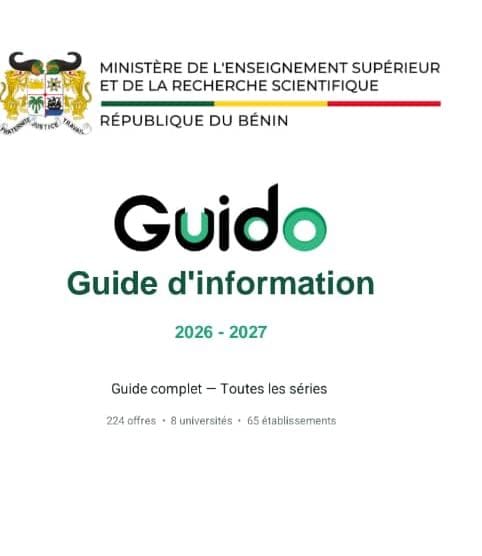
The new academic guidance document clearly distinguishes between funded programs and those that are not. Scholarships will continue to be provided in the following key sectors:
Science and Technology: Mathematics, Physics, Chemistry, Biology, Computer Science, Engineering, Agronomy.
Health: Medicine, Pharmacy, Midwifery, ISBA (Higher Institute of Applied Biology).
Educational Sciences: Higher Teacher Training Colleges (ENS) for teacher training (Mathematics, Physics and Chemistry, Life and Earth Sciences, French).
Targeted professional fields: Economics, Management, Tourism.
Access to higher education is thus entering a new era where passion sometimes gives way to economic pragmatism. In 2026, more than ever, new high school graduates will have to carefully examine the eligibility requirements for financial aid before finalizing their university choices, or risk embarking on a financially challenging journey.
Prosper CAKPO (Intern)
À propos de cet auteur