CLEANING WITH THE GOOD LADIES: When Ignorance of Hygiene Takes Over Our Plates
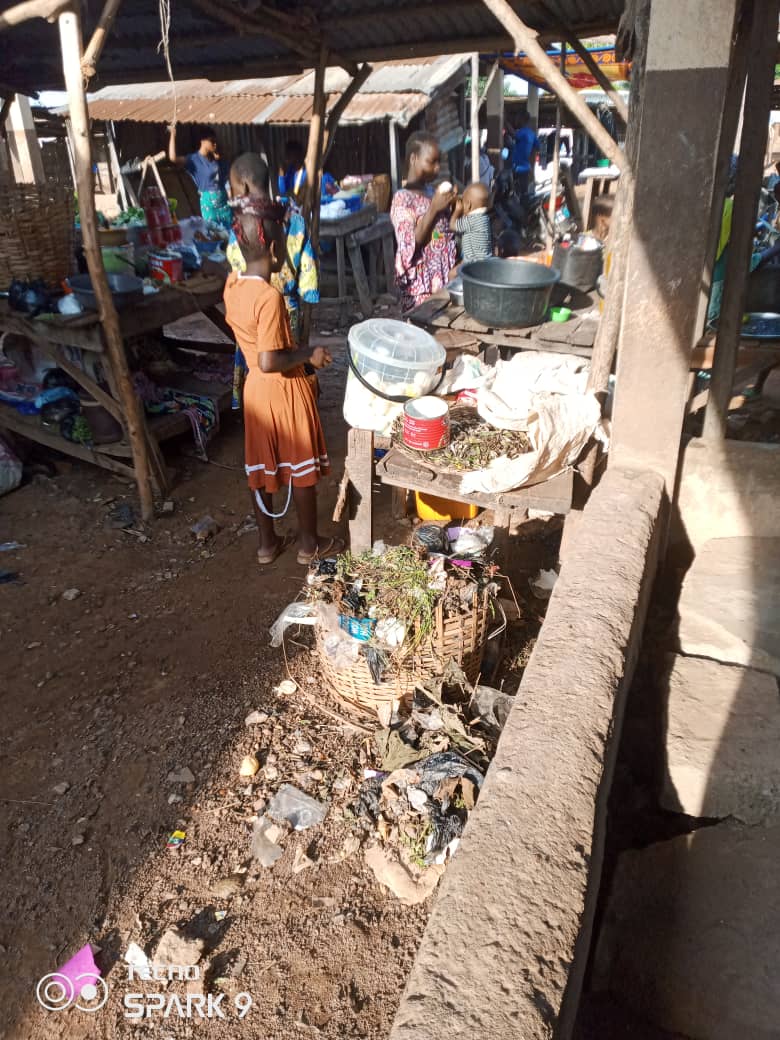
At rural markets and crossroads, the « good ladies » line up pots and basins at dawn. But behind the enticing aromas of rice, beans, or sauce lies a sometimes harsh reality: a shortage of drinking water, hastily washed hands, food left out in the open and swarming with flies. For thousands of consumers, every meal purchased becomes a gamble with their health. Ignorance of basic food safety rules transforms these small, local businesses into veritable vectors of disease.
In several rural areas, uncleanliness seems to have become a daily occurrence for some vendors. Between a lack of training and negligence, the pursuit of profit sometimes takes precedence over public health.
Fidèle AHOUÉ, a nurse at the CSC BWE-DORA « Ag » clinic, makes a clear-eyed observation: « In isolated areas, everyone does pretty much as they please. Hygiene standards are still lacking, even though you can tell some vendors are trying to improve. »
This is the case for Clémentine NOUANTI, a vendor at a local roadside eatery, who tries to maintain a certain level of discipline: « I sweep my surroundings and my sales area, and I wash the bowls thoroughly because we sell food, » she explains. To ensure the cleanliness of her food, she specifies that she washes rice or beans at least four times before cooking them, in order to eliminate impurities and protect her customers.
Faced with these inconsistent practices, customers are beginning to develop more cautious habits. “If a vendor doesn’t protect her food, I don’t buy it,” a customer stated, speaking on condition of anonymity. This testimony shows that today’s consumer is increasingly aware of the impact of the retail environment on their well-being.
And for good reason: consuming contaminated food has direct and painful consequences. Jacqueline Kassa regularly experiences this firsthand: “When I buy food outside, I often end up with stomach aches and nausea.”
Nurse Fidèle Ahoué emphasizes the serious medical consequences of this negligence: “This lack of hygiene leads to cases of cholera, typhoid fever, and acute gastroenteritis, which are particularly virulent in children under five and some vulnerable adults.” «
A crucial imperative: taking action along the preparation chain
To sanitize these isolated environments, maintaining strict hygiene at points of sale is no longer optional; it’s an urgent necessity. The personal hygiene of the vendors, the upkeep of the work environment, and the quality of the food must become absolute priorities.
Healthcare professionals recommend a comprehensive approach:
« It is absolutely essential to ensure the personal hygiene of the person cooking, sanitize the sales environment, scrub kitchen utensils, and provide airtight protection for dishes against flies and dust, which are breeding grounds for microbes. »
The message is clear: feeding the population is a noble service, but doing so while protecting one’s own life is a duty.
Prospère CAKPO & Déodora ALLOGBE (Interns)
À propos de cet auteur